photo 3ec5abe8-497d-41af-a7dd-29050aea8f7e.jpg

“民间组织・议会斗争・民主人权”论坛 ——人民之友工委会12周年纪念

Showing posts with label 3.语文教育. Show all posts

Thursday, December 19, 2013

母语教育体系是人民首选学府

母语教育体系是人民首选学府

作者:杨敦祥


【编者按语】作者杨敦祥是民主行动党籍柔佛北干那那州议员,也是人民之友工委会工委。

本文是杨敦祥应林连玉基金邀约为纪念今年的华教节而撰写的一篇文章。

本文的插图是编者所加的,以下是文章的全文——


马来西亚华校发展一路艰辛,师资常年不足、华小不获增建、学额年年爆满,年复一年悲歌不停。这一切皆根源于国家数十年落实歧视和压迫母语教育发展的教育政策。

最终目标“借尸还魂”

《2013-2025年教育大蓝图》提出,让国民小学和国民中学在2025年成为所有家长首选学府的最终目标,其实是《1956年拉萨报告书》内第12条文最终目标的“借尸还魂”,即落实一个以国语为主要教学媒介语的国民教育制度。

董总号召反对教育大蓝图签名运动目前已获近60万个签名,但是距离其总目标100万还有一段距离。各界人士都应该配合这项运动,表达大家共同反对《2013—2025年教育大蓝图》内种种不利于各源流母语教育生存和发展的政策和措施。


母语教育在教学成果的优越性不容置疑。联合国文教科组织(UNESCO)在1951年就已经指出:“学生一开始上学就应该以母语作为教学媒介,并且应尽量将母语的使用,推向教育的更高阶段上去。”

让母语教育发展到高阶

根据这个标准,马来西亚人民的首选学府其实是以母语为教学媒介语的学校。政府应根据教育是栽培人才的原则,让母语教育发展到最高阶段。

瑞士位于法国、德国和意大利边界,居住着以德语、法语和意大利语为母语的不同族群。其中,63.6%居民讲德语、20.4%的居民讲法语、6.5%的人讲意大利语。然而,该国却能实行公平合理的教育政策,让不同语言、文化的族群,通过母语学习直到大学阶段。这是国阵政府所应该看齐和学习的。

林连玉在《教总反对改方言学校为国民学校宣言》中所提出“成为马来亚国民,是以尽义务、效忠诚为条件,不是以弃母语、毁文化为条件”。

然而,国阵政府(前身为联盟政府)延续英殖民政府分而治之的政治手腕,数十年来刻意将国民效忠、国民团结与语文学习挂钩,使马来西亚教育体系因政治干预,造成各源流母语教育长年累月处在水深火热之中。政治干预教育是华印源流教育面对种种问题的根源。

让教育回归本源

数十年来,狭隘的国阵政府执意将误人子弟的单元化教育政策贯彻到底,摧毁了无数有机会成才的幼苗,这是国家的悲哀。让教育回归本源,留片净土给神圣学府,是我国莘莘学子的福音。

落实单元教育政策以同化我国不同民族是我国教育政策的重大败笔。唯有政府承认我国已延续了五十多年错误的教育政策,愿意改弦易辙,我们国家的教育发展才能踏上正轨。

505大选后的国阵政府依旧倒行逆施,各界人士更应响应董总所号召的《反对2013-2025年教育大蓝图》签名运动,不要对未来母语教育的困境掉以轻心。


此文也于2013年12月12日在以下媒体刊登:

1、 《当今大马》专栏 http://www.malaysiakini.com/columns/249156
2、 《东方日报》名家 http://www.orientaldaily.com.my/index.php?option=com_k2&view=item&id=89267:&Itemid=201

Saturday, December 14, 2013

Tuntutan Hak Pendidikan Bahasa Ibunda yang Adil: “Kerajaan Harus Tubuhkan Sekolah Menengah Bahasa Tamil”

Tuntutan Hak Pendidikan Bahasa Ibunda yang Adil:
“Kerajaan Harus Tubuhkan 
Sekolah Menengah Bahasa Tamil”

促请政府设立淡米尔语文中学:印裔族群争取母语教育权利的正义诉求

 Penterjemahan Kenyataan Media yang Dikeluarkan oleh Sahabat Rakyat 
Working Committee dalam Bahasa Mandarin pada 9 Disember 2013

Sesetengah pemimpin kaum India yang sebelum ini masih mempunyai khayalan terhadap tawaran pengampunan klik pemerintah hegemoni UMNO, terpaksa mengikut keinginan akar umbi massa kaum India dengan membuat “aduan terbuka”, agar “kerajaan harus menubuhkan sekolah menengah Bahasa Tamil”.

Kami Jawatankuasa Kerja Sahabat Rakyat mengemukakan kenyataan lima poin berikut, berkenaan dengan seruan pemimpin Parti Makkal Sakti yang “menuntut kerajaan tubuhkan sekolah menengah Bahasa Tamil”:

1. Pengerusi Parti Makkal Sakti, R. S. Thanenthiran mengemukakan tuntutan “menubuhkan sekolah menengah Bahasa Tamil” kepada Timbalan Perdana Menteri, Muhyiddin Yassin yang juga selaku Menteri Pendidikan secara terbuka pada 1 Disember 2013. Dia berasa tidak puas hati bahawa tiada pun sebuah sekolah menengah yang ditubuhkan selepas negara mencapai kemerdekaan selama 57 tahun. Pada pandangan kami, klik pemerintahan hegemoni UMNO mengabaikan keinginan asas masyarakat India dalam hal-ehwal pendidikan selama ini, termasuk kerajaan seharusnya membela sekolah rendah Bahasa Tamil dan menubuhkan sekolah menengah Bahasa Tamil. Di samping itu, dasar pemerintahan dalam politik, ekonomi, kebudayaan, keagamaan dan sebagainya sudah lama bertentangan dengan kepentingan masyarakat India. Akhirnya, ini menimbulkan kemarahan secara berleluasa di kalangan masyarakat India.

Dengan memperolehi kerjasama segelintir pemimpin kaum India yang sanggup menerima tawaran pengampunan, klik pemerintahan hegemoni UMNO telah mengait undi masyarakat India dan menawan kuasa pemerintahan sekali lagi. Selepas itu, mereka bersikap lebih sombong dan degil  dalam melaksanakan “Pelan Pembangunan Pendidikan 2013-2025” yang sudah lama disiap sediakan supaya dapat menghapuskan pendidikan bahasa Ibunda masyarakat India (terutamanya Tamil) dan masyarakat Cina dalam negara ini secepat mungkin. Sudah pastinya, mereka akan teruskan dasar-dasar pemerintahan yang bertentangan dengan keinginan kaum minoriti dalam bidang politik, ekonomi, kebudayaan, keagamaan dan sebagainya. Berdepan dengan situasi yang begitu genting sekali, pemimpin kaum India yang selama ini mempunyai khayalan terhadap tawaran pengampunan klik pemerintahan hegemoni UMNO, terpaksa mengikut keinginan akar umbi massa kaum India dengan membuat “aduan terbuka”. Walau bagaimanapun, “kerajaan tubuhkan sekolah menengah Bahasa Tamil” merupakan tuntutan adil yang menepati kepentingan dan keinginan masyarakat India (termasuk juga masyarakat yang lain). Oleh itu, adalah kewajaran dan kewajiban kami untuk memberi sokongan terhadap tindakan yang betul tersebut.

2. Sebenarnya, tuntutan penubuhan sekolah menengah Bahasa Tamil daripada masyarakat India adalah serupa dengan tuntutan menambahkan sekolah menengah (persendirian) Bahasa Tiong Hua daripada masyarakat Cina. Kedua-duanya merupakan hak asasi menerima pendidikan Bahasa Ibunda kaum masing-masing yang diperuntukkan dalam “Deklarasi Hak Asasi Manusia Sejagat” dan “Perlembagaan Persekutuan” negara kita. Selama ini, klik pemerintahan hegemoni UMNO mengusahakan peminggiran pendidikan Bahasa Ibunda secara beransur-ansur. Akibatnya, sekolah rendah Bahasa Tamil yang dimiliki oleh kaum India telah berkurangan secara mendadak dari 888 buah semasa kemerdekaan kepada 523 buah pada hari ini. Namun dalam tempoh yang sama, populasi kaum India bertambah sebanyak tiga kali ganda (dari 735,038 pada tahun 1957 kepada 1,924,900 pada tahun 2010).

Keadaan pendidikan Bahasa Tamil sekarang adalah lagi menyedihkan jika dibandingkan dengan pendidikan Bahasa Tiong Hua, terutamanya langsung tiada sebuah sekolah menengah Bahasa Tamil yang didirikan. Oleh yang demikian, penubuhan sekolah menengah Bahasa Tamil akan menjadi kritikal dalam memperluaskan penggunaan Bahasa Ibunda di kalangan kaum Tamil. Dengan adanya sekolah menengah Bahasa Tamil, kewujudan jangka panjang sekolah rendah Bahasa Tamil dapat dikekalkan kerana sumber pembekalan guru menjadi stabil. Penubuhan sekolah menengah Bahasa Tamil merupakan tuntutan masyarakat India yang berpatutan, munasabah dan sah di sisi undang-undang demi mempertahankan dan membangunkan pendidikan Bahasa Ibunda, mewariskan dan mengembangkan kebudayaan kaum tersebut.

Keadaan SRJK (T) kini amat menyedihkan, Sekolah Menengah Bahasa Tamil 
yang diimpikan masih lagi jauh di kaki langit.
(Gambar Daripada: drshafie.blogspot.com/2012/03/mengagihkan-beg-sekolah-kepada-dua-buah.html)
3. Pemimpin MIC juga pernah menghantar memorandum berkenaan tuntutan membina sekolah menengah Tamil kepada kerajaan sebelum pilihan raya ke-13. Klik hegemoni UMNO bukan sahaja tidak mengendahkan tuntutan tersebut, malah menawarkan pengampunan dan memancing penyertaan beberapa pemimpin Hindraf bagi tujuan mengait undi kaum India demi mengekalkan kedudukan pemerintahan mereka. Tuntutan terang-terangan untuk membina sekolah menengah Tamil yang dikemukakan oleh Pengerusi Parti Makkal Sakthi R. S. Thanenthiran membawa makna khas, terutamanya setelah pengerusi Hindraf Waytha Moorthy mengambil pendirian bertentangan dengan masyarakat India dan rakyat dengan “menerima pengampunan dan berlutut” kepada Najib demi kepentingan individu. Tuntutan sedemikan dikemukakan sekali lagi selepas klik hegemoni UMNO memenangi PRU Ke-13 dan mengekalkan pemerintahan. Ini menunjukkan bahawa massa akar umbi India pasti akan meneruskan perjuangan jerih payah memperjuangkan hak asasi seperti sediakala, atas pengajaran kejam daripada realiti. Walaupun mereka pernah mengalami kegagalan dan halangan, perjuangan mereka demi hak asasi dan maruah kaum tidak akan digagalkan dan dimusnahkan atas sebab sesetengah pemimpin yang membelakangi dan mengkhianati ataupun meninggalkan perjuangan ini.

4. Masyarakat India sekali lagi mengemukakan tuntutan membina sekolah menengah Tamil membuktikan bahawa: Sungguhpun klik hegemoni UMNO memeras otak mencari akal untuk menindas dan melumpuhkan kewujudan dan pembangunan sekolah menengah bahasa Ibunda masyarakat kaum-kaum lain (terutamanya kaum Cina dan India), namun ia tidak dapat mengekang kesedaran rakyat pelbagai kaum (termasuk kaum Melayu). Ia juga tidak dapat menghalang kaum minoriti di negara kita melaungkan tuntutan untuk memperjuangkan hak pendidikan samarata; Sungguhpun klik hegemoni UMNO bertindak keras untuk melaksanakan dasar pendidikan “Satu Negara, Satu Bangsa, Satu Bahasa” yang bertujuan untuk menjalankan pengasimilasian secara paksa, ia tidak dapat menghalang masyarakat Cina daripada berdikari dan berjuang keras demi mempertahankan kewujudan dan pembangunan sekolah persendirian Tiong Hua. Kedua-dua tuntutan masyarakat India memperjuangkan penubuhan sekolah menengah Tamil dan aspirasi masyarakat Cina membantah pengubahan sistem sekolah Cina dan mempertahankan sekolah persendirian Tiong Hua sejak 1960an merupakan satu manifestasi konkrit rakyat tertindas memperjuangkan hak pendidikan bahasa ibunda samarata. Parti-parti politik demokrasi, pertubuhan-pertubuhan bukan kerajaan (NGOs) dan rakyat tertindas pelbagai kaum seharusnya prihatin dan menyokong tuntutan tersebut.

5. Sebagaimana yang kami ketahui, hanya Dong Zong dan Pusat Pembanguan Kebudayaan LLG yang telah menyuarakan sokongan mereka terhadap tuntutan masyarakat India terhadap kerajaan untuk membina sekolah menengah Tamil  pada 2 Disember dan 6 Disember masing-masing. Selain daripada itu, tiada lagi perhatian dan maklum balas yang sepatutnya daripada parti politik (terutamanya Democratic Action Party, Parti Keadilan Rakyat Malaysia, Parti Islam Se-Malaysia dan Parti Sosialis Malaysia) dan pertubuhan-pertubuhan pelbagai bidang (terutamanya pertubuhan yang nampaknya radikal dan sentiasa mengeluarkan kenyataan sepanjang 10 tahun ini, serta organisasi kebudayaan dan pendidikan dan pertubuhan pimpinan dalam masyarakat Cina dan India yang berkedudukan tinggi dan pernah menyumbang) terhadap tuntutan tersebut. Keadaan ini betul-betul menimbulkan keraguan dan kerisauan sesiapapun yang mencintai bahasa ibunda pelbagai kaum.

Monday, December 9, 2013

促请政府设立淡米尔语文中学:印裔族群争取母语教育权利的正义诉求

    促请政府设立淡米尔语文中学 :
印裔族群争取母语教育权利的正义诉求

人民之友工委会2013年12月9日声明

连原本对巫统霸权统治集团的安抚收编还存有一丝幻想的印裔族群领袖也不得不遵循印裔基层群众的愿望与要求,向当权者“公开呛声”,提出“设立淡米尔语文中学”的诉求。

我们,人民之友工委会,针对人民力量党领袖发出的“促请政府设立淡米尔文中学”的呼吁,发表以下5点声明——

一、 人民力量党主席达仁迪南在2013年12月1日公开向副首相兼教育部长慕尤丁提出“设立淡米尔语文中学”的诉求,他对国家独立了57年还没有设立一所淡米尔语文中学,感到愤懑。我们认为,巫统霸权统治集团长期以来在教育方面罔顾印裔族群要求政府照顾淡米尔语文小学,以及要求政府设立淡米尔语文中学的基本愿望,以及在政治、经济、文化与宗教等方面的倒行逆施,已引起印裔族群的普遍愤懑;巫统霸权统治集团在一小撮接受招安的印裔领袖的配合下,在第13届大选骗取了印裔族群的支持而又赢得政权以后,更加嚣张顽固推行其蓄谋已久的《2013—2025年教育发展大蓝图》,以便在国内尽快消灭印裔(主要是淡米尔)族群和华裔族群的民族语文教育,而在政治、经济、文化与宗教方面的继续倒行逆施,更是不在话下;面对当下如此严峻局面,就连原本对巫统霸权统治集团的安抚收编还存有一丝幻想的印裔族群领袖也不得不遵循印裔基层群众的愿望与要求,向当权者“公开呛声”了。无论如何,“促请政府设立淡米尔语文中学”是符合印裔族群(当然也包括其他族群)利益和愿望的正义诉求,我们理所当然、义不容辞支持这项正当行动。

二、 印裔族群要求设立淡米尔语文中学,跟华裔族群要求增设华文(独立)中学一样,都是《世界人权宣言》和我国《联邦宪法》规定下各个族群所应享有的接受民族母语教育的基本权利。巫统霸权统治集团长期实行逐步边缘化民族母语教育,使到印裔族群所拥有的淡米尔语文小学,从独立时的888所锐减到今天的523所,而印裔人口却增长了近3倍(从1957年735,038人增长到2010年1,924,900人)。印裔淡米尔语文教育的处境比华文教育的处境更加可悲,尤其是连一所淡米尔语文中学都没有。因此,设立淡米尔语文中学,对推广淡米尔族群使用母语,以及为淡米尔语文小学提供师资来源,维持淡米尔语文小学长期存在,起到至关重要的作用,是印裔族群维护和发展民族母语教育、传承和发扬民族固有文化的合情合理合法的要求。

现存的淡小处境堪虞,梦想的淡中遥遥无期。
(图片来源:drshafie.blogspot.com/2012/03/mengagihkan-beg-sekolah-kepada-dua-buah.html)
三、 在第13届大选前,印度国大党领袖也曾向政府呈交兴建淡米尔语文中学的备忘录,巫统霸权集团却置之不理,而对一些曾经领导兴权会运动的多名领袖进行招安收编的工作,以骗取印裔族群的选票而延续其统治地位。人民力量党主席达仁迪南在兴权会主席瓦达慕迪为了个人利益接受纳吉的招安而站到印裔族群和全国人民的对立面去之后,公开向慕尤丁提出设立淡米尔语文中学的诉求,更显得它的特殊意义。这项诉求在巫统霸权集团赢得第13届大选继续掌握政权之后再次提出,标志着广大的印裔基层群众在残酷现实的教育下,必定会一如既往继续展开争取权利的艰苦斗争,尽管面对重重挫折和障碍,他们维护基本权利和民族尊严的斗争绝不会因为个别领袖的变节背叛或放弃斗争,而就此一败涂地、一蹶不振。

四、 印裔族群又一次提出设立淡米尔语文中学的事件证明:尽管巫统霸权统治集团费尽心机打压和破坏其他族群(主要是华印族群)的母语中学的生存与发展,却无法抑制各族人民(包括巫裔族群)的普遍觉醒,不能阻止国内少数民族发出争取平等教育权利的诉求;尽管巫统霸权统治集团强硬实施“一个国家、一个民族、一种语文”的强制同化的教育政策,却不能阻止华裔族群自力更生、艰苦奋斗,保卫华文独中的生存与发展。印裔族群争取设立淡米尔语文中学的诉求,和华裔族群自上个世纪60年代以来反对华文中学改制、维护独中生存发展的愿望,两者都是国内被压迫人民争取平等的民族母语教育权利的具体表现,理应受到全国民主政党、非政府组织(即民间组织)和被压迫的各族人民的密切关怀和大力支持。

五、 根据我们所了解的情况,印裔族群这次提出促请政府设立淡米尔语文中学的诉求,除了董总及林连玉基金分别于12月2日及12月6日发表声明表示支持以外,似乎没有引起国内几个民主政党(主要是民主行动党、人民公正党、伊斯兰党以及社会主义党)以及各类非政府组织(即民间组织,尤其是那些近10年来在民主人权课题上经常发表声明、表现鲜明激进的各领域的非政府组织,以及那些一路来在维护华印民族母语教育,颇有言论地位也曾做出贡献的华印族群社会的领导组织和文化教育团体)应有的关注和响应。这种现象的发生,确实令许多热爱民族母语教育的人士疑惑和忧虑。

Sunday, December 8, 2013

教育改革须从反掉《1996年教育法令》17条(1)做起

 教 育 改 革 
须从反掉《1996年教育法令》17条(1)做起

作者:吴振宇


【编者按语】作者吴振宇于2002至2004年期间任“人民之声新山分会”协调员,现为人民之友工委会工委。

本文是吴振宇应林连玉基金邀约为纪念今年的华教节而撰写的一篇文章。他日前发送给人民之友工委会秘书处,请求将它发表在本部落格。

作者在本文所表达的立场与观点,跟人民之友工委会在2012年11月21日《抗拒巫统国阵消灭华、淡民族语文教育;反掉1996年教育法令第17(1)条文!》声明与2013年8月25日《建议华团一致张挂布条:“坚决拒绝《教育发展大蓝图》”!》声明所表达的立场与观点是相一致的。

本文的两张插图是编者所加的,以下是文章的全文——

从2012年9月11日《2013-2025教育发展大蓝图初步报告》公布,到2013年9月6日副首相兼教育部長慕尤丁正式推介《2013-2025教育发展大蓝图最终报告》的一年时间里,我国华人社会以及华教人士对此《大蓝图》特别关注和警惕。因为历史告诉我们,从上个世纪50年代至今,政府在各个阶段出台的教育报告书(如 1951年《巴恩报告书》、1956年 《拉萨报告书》、1960年《拉曼达立报告书》、1969年《阿兹士报告书》、《1997年内阁教育报告书》),都旨在消灭华、淡民族母语教育,落实单元(马来文)教育的“最终目标”。

至今,除了华教运动领导组织董总推动“反对《2013–2025年教育大蓝图》内不利于母语教育生存与发展的政策和措施”百万签名运动、在全国各地频繁举办汇报会外,许多华团也详细研究《大蓝图》的各项转型计划,并提出改善建议。比如林连玉基金、华研、隆雪华堂等16个团体就于2013年5月出版了《改革国民教育:“2013-2025年教育大蓝图(初版)”的评析与建议》。尔后在《大蓝图》最终报告出台后,于2013年10月13日再联合教总、校长职工会等共27个团体联办“教育蓝图与国民教育的前路”研讨会,积极谏言。

尽管华社领导组织熙熙攘攘,只是一片声浪,终究无法遏制国阵政府继续推行旨在实现“一个国家,一种语文,一个源流”这个“最终目标”(强制同化)的《大蓝图》。追根究底,最根本的原因是上述华社领导组织的抗争行动,大多流于表面议论,隔靴搔痒,或看不清《大蓝图》的真实面目,对国阵统治集团还存有幻想。

董总主席叶新田在2005年上任时就曾指出“我国华文教育要能摆脱变质、式微甚至死亡的威胁……就必须在国家教育政策层面去解决”、“各民族母语教育在教育政策及教育法令下获得公平合理的地位,这是一项必须长期努力、永不放弃及不能讨价还价的工作目标”。曾担任董总首席行政主任长达25年,现任林连玉基金董事莫泰熙也于2009年9月26日出席新山“新纪元•董教总•华教运动”讲座会发言《一个‘永远的华教园丁’眼中——我国华教运动的过去与未来景观》中表示 “从 1961年教育法令到1996年教育法令,“母语教育”根本没有地位……当权者通过教育法令要将华文教育连根拔起”。


由此可见,在独立后实行议会民主的马来西亚,破坏多元文化教育源流、强行单元化教育政策 、企图消灭华、淡民族母语教育的罪魁祸首,就是操控选举而掌握政权已逾半个世纪的以巫统为主导的国阵统治集团,1996年教育法令第17(1)条文正是统治集团架在华印(当然包括其他少数民族)母语教育脖子上的铡刀,只等时机到来,就要‘咔嚓’一声,就此一了百了。我们必须认识到,写得表面冠冕堂皇的《教育发展大蓝图》只是国阵统治集团在执行强制同化的教育政策的关键时期,用来欺骗人民的“糖衣毒药”,以实现其“最终目标”的最新迷人花招罢了,巫统霸权统治集团并非真心诚意进行教育改革。这从那吉上台以来推行的各项转型计划,在种族霸权思想的支配下,最终都落得胎死腹中或空雷不雨的结局得到印证。

因此,想要在国家教育体制中实现多元文化的理念,我国华教与华社领导组织和领袖就必须首先丢掉对巫统主导的国阵统治集团的幻想,展现“敢于斗争,不怕牺牲”的坚定意志,带领全国热爱民族教育的各民族、各阶层人民开展“坚决拒绝《教育发展大蓝图》,反掉 《1996年教育法令》第17(1)条文”的广泛斗争,不得为着个人利害关系而趋炎附势,或软化妥协、放弃立场,或甚至接受招安收编。林连玉基金署理主席刘锡通就在他受邀在2013年10月20日柔佛州古来举行的“民间组织•议会斗争•民主人权”论坛上发表的论文《民间组织必须掌握议会斗争; 建立联合阵线 力争民主人权》中批评董总(为了反对《大蓝图》而)进行的签名、汇报、呈备忘录等行动是“旧模式”,而董总领导人“一会儿说要投诉到联合国,一会儿说要告政府,但却是空雷不雨,这种举棋不定的风格真叫人无所适从”。


总之,只有在我国华社对霸权统治的政治觉醒提高,抛弃对统治集团所存有的幻想,领袖们(尤其是华教领袖们)勇于领导群众坚决反掉 《1996年教育法令》第17(1)条文(这是当前阶段巫统主导的国阵政府消灭华印民族母语教育的关键性措施和最主要的法律依据),大家所追求的“多彩多姿,共存共荣”的美好理想才有望实现。教育改革必须从废除关键性的法律条文做起,否则,一切都是流于“舍本逐末”的空谈,难逃最终失败的厄运。

在一年一度的华教节来临之时,笔者愿以族魂林連玉的一句言论:“一個民族要获得平等的权利,不是作了呼吁就可以达到目的的,必須经历挫折,忍受牺牲,不断奋斗,然后才有所成”(摘自郑良树编的《林连玉先生言论集》),与读者共勉,作为这篇文章的结尾。

写于2013年11月10日

*1996年教育法令17条(1)规定:“除了在1996年教育法令下设立的国民型小学,或者部长所豁免的其他教育机构以外,在国家教育体系中所有的教育机构,都必须以马来西亚语作为主要教学媒介语。”

认清现行“国民教育”实质内容 弘扬林连玉精神由华文独中做起【12月9日更新:链接】

认清现行“国民教育”实质内容
弘扬林连玉精神由华文独中做起

作者:严居汉

【2013年12月9日更新:相关链接】


【编者按语】作者严居汉,目前在马来西亚国民大学(UKM)研读人类学与社会学硕士课程。作者是现任人民之友工委会工委及林连玉基金永久会员。

本文是严居汉应林连玉基金邀约为纪念今年的华教节而撰写的一篇感言。他日前发送给人民之友工委会秘书处,请求将它发表在本部落格。

本文的两张插图是编者所加的,以下是文章的全文——

我感激林连玉基金让我有机会为本届“2013年华教节特辑”提供感言。今年的华教节主题是“关于国民教育与独中改革”。从我国教育发展史来考察,国民教育与独中改革,两者有着各自不同的内容,必须加以区分识别;两者之间又息息相关,两者关系的复杂性不是三言两语就能够说清楚的。由于主办单位征稿有字数限制,我只能简单扼要提出我个人认为重要的两点意见,给全体同仁和各位友好参考。

一、认清现行“国民教育”实质内容

我国自1957年独立以来,马来西亚国民教育发展的总方向,由于以巫统为主导的种族霸权集团连续执政,一直遵循《1956年拉萨报告书》所确立的指导思想。这份《报告书》旨在说明,必须在各个阶段做好准备、按部就班逐步完成“国民教育”制度,以实现“一个国家、一个民族、一种语文”的“最终目标”。《1961年教育法令》实施后,华印民族母语教育遭受灾难性的打击,华印语文学校受到侵蚀和破坏,“华文独中”也就是这项法令实施下华族维护民族教育斗争的产物。现行的《1996年教育法令》,比《1961年教育法令》,对各民族母语教育的压制和打击更为变本加厉,其中的第17条(1)项条文,强硬规定所有教育机构包括从幼稚园直到大学必须以马来语文作为主要的教学媒介;第18条(1)项条文,强硬规定部长必须规定一项课程,称为国家课程,国家教育制度内的所有学校都必须使用这个课程,等等。

华社强烈反对国阵政府强硬实施消灭华印语文教育的《2013—2025教育发展大蓝图》

简单说来,“国民教育”的实质内容就是强制我国各族人民必须接受巫统霸权统治集团所灌输的意识形态和价值观念(这对国内华印及其他少数民族来说,就是对他们进行强制同化)。《2013—2025年教育发展大蓝图》即将实施,这意味着各民族母语教育到了濒于灭亡的境地——这也意味着争取民族母语教育平等权利的华教运动,在现阶段面临一个生死存亡的最危急关头。

巫统霸权统治集团剥夺国内华印及其他少数民族接受各自民族母语教育的平等权利,推行其“国民教育”强制同化其他少数民族的做法,是严重违反《世界人权宣言》的。《世界人权宣言》第二十六条(1)和(2)条文,强调人人都有受教育的权利,教育应当免费;教育的目的在于充分发展人的个性并加强对人权和基本自由的尊重;教育应促进各国、各种族或各宗教集团间的了解、容忍和友谊,并应促进联合国维护和平的各项活动。

早在国家独立之前,华教运动杰出领袖林连玉就已提出“共存共荣”的主张和愿望,即(1)政府应当尊重国内各民族母语教育继续存在与持续发展;(2)当时国内主要巫、华、印三大民族的民族语文与母语教育的权利,应受政府的肯定和法律的保障;(3)各民族语文的平等权利受到了肯定和保障,各源流学校的平等发展才能顺理成章。上述林连玉代表国内少数民族提出的主张和愿望,在国家独立57年的过程中,却成了与巫统霸权统治集团倒行逆施的国家教育政策的强烈对比和现行的“国民教育”的反动本质的有力证明。

二、弘扬林连玉精神由华文独中做起

今年是独中复兴40周年,也应该认真反省独中教育的缺陷的时候了。为了简要说明,我把华文独中教育的发展分为两个阶段:(一)过去的阶段,我们的前辈们抵挡巫统霸权统治集团的强硬打压,又四处奔波任劳任怨为独中募捐筹款,在全国范围内把60所独中保存下来并创造了不俗的成绩,完成了独中教育前半段的使命。前辈们在这前半段的功劳是不可抹杀的。(二)未来的阶段,应该是由当下华教领导组织以至整体华社联合展开“独中复兴2.0”(即独中改革)的时候了。“独中复兴2.0”无疑是华教运动在新阶段的艰巨繁杂的任务,但是独中改革必须从根本之处做起。

每年华教节,华教人士都纪念林连玉和发扬林连玉精神。董总第二号领袖邹寿汉在今年的“华教先贤日”推介仪式上感慨万分地说,许多人都不认识林连玉,就连独中生也不认识林连玉。邹寿汉此言或许有其个人动机,但他所说情况属实,我也有相同感受。我曾在柔佛笨珍培群独中当过几年老师和课外活动主任,因此在校内和校外接触过不少的独中生,在社会上我也接触过许多独中出身的各界人士。但是,我发觉到,接受过独中教育的莘莘学子,有多少个能真正了解或正确认识林连玉其人其事,乃是一个值得关心华教问题和华教前途人士深入思考的问题。这无疑是独中教育亟需迅速补救的其中一个严重缺陷。我这么说,当然不是抹杀那些站在独中教育最前线默默耕耘的独中老师和那些争取华文教育的合理地位以及华文教育体系的完整性的华教人士对华文教育的努力和贡献。

个人认为,上述缺陷若补救不了,我们就无法确定华文独中存在的意义,更不用说可以让其他友族同胞能够真正了解华裔族群的遭遇和诉求;若华教组织不提华文独中和林连玉其人其事,不提民族母语教育和林连玉精神,而跟其他不同民族的各式各样组织进行跨族群的对话和工作必然是内容空洞的;刻意忽视民族平等权利的跨族群对话和工作,根本无法达致民族团结、共存共荣的目标。因此,弘扬林连玉精神是当下华教领导组织的首要任务。

个人认为,补救上述缺陷或许可以通过以下两项工作进行:

(一)独中教育课程必须纳入“林连玉与华文教育奋斗史”的篇章。唯有这样,独中生才能名正言顺从课本上直接认识关于林连玉与华教问题,同时,独中老师以至学生家长也能间接认识关于林连玉和华教的奋斗事迹。

(二)独中董事部理应团结校方、家长与华社,发挥集体力量,到全国各地华文独中游说树立“林连玉铜像”并极力推动全国性筹募“林连玉铜像”资金运动作为今后的行动号召。

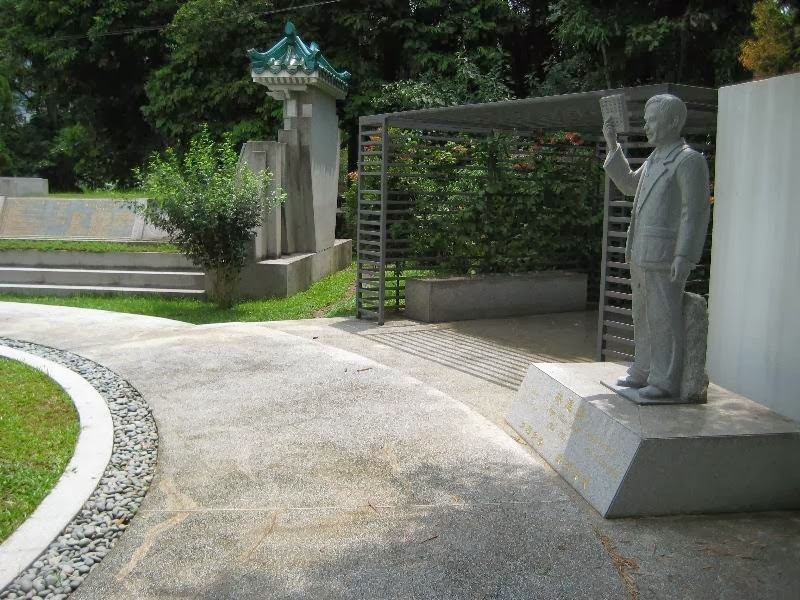
上图是林连玉墓园里的林连玉塑像。希望有朝一日,在全国所有独中校园里,都能见到像这样高大的一尊林连玉铜像,让人追思景仰——这是全国华教和华社可以实现的梦想!

若董总愿意发动其组织力量,执行上述工作,必定能事半功倍。若当下董总的核心领导基于某些原因无法履行这项任务,林连玉基金则是责无旁贷扛起重任,尽最大力量完成此项意义重大的工作,将弘扬林连玉精神的工作推到一个新的里程碑。

(2013年11月杪稿于马来西亚,雪兰莪万宜)


此文也分别于2013年12月8日及9日刊登在《南洋商报》言论版:

1、 教育视窗:认清“国民教育”实质内容(上篇) http://www.nanyang.com/node/584431?tid=490
2、 教育视窗:莫让老师变书记(下篇) http://www.nanyang.com/node/584640?tid=490

Saturday, September 7, 2013

《陈六使图片展前言》

《陈六使图片展前言》

“我们尊称他为“华教旗手,民族典范”,
他是当之无愧的。这次展览会的重大
意义和精神就在这里。”

作者 / 来源:霹雳南洋大学校友会


霹雳南洋大学校友会主办、国内外各地校友会协办的“南大之夜晚宴”、“陈六使追思会”与“陈六使图片展”,在2013年9月7日(星期六)及8日(星期日),假霹雳州怡保市舜苑大酒店(SYUEN HOTEL ,IPOH,PERAK)隆重举行。协办單位包括槟榔屿南大校友会、馬來亞南大校友会、马六甲南大校友会、新山南大校友会、砂拉越南大校友会、加拿大多倫多南大校友会、溫哥华南大校友会及香港南大校友会。

上图为“陈六使图片展”的主题图片。以下是《陈六使图片展前言》全文内容——


陈六使(1897-1972)是南洋大学创办人。他也是星马在上个世纪五十到七十年代最重要的华社领袖之一。身为企业家、社会活动家,他为民族教育事业鞠躬尽粹,为社会和人民作出巨大的贡献。我们尊称他为“华教旗手,民族典范”,他是当之无愧的。这次展览会的重大意义和精神就在这里。

他和林连玉一样是我们民族的骄傲、国家的光荣和人民的楷模。他的光辉表现,他的人格已经载入历史,和无数的先贤们一样,已成为我们民族永恒的纪念碑,任何的污蔑都无法改变。长期以来,尽管李光耀不断地伤害他,都无损于他在历史上的地位,反而显得更重要,彰显出“陈六使所代表的巨大历史意义”,以及“对他(指李光耀)建国正当性及历史名声的永久拷问”(见徐威雄《论陈六使及其时代》一文)。

马丁•路德说过:“一个国家的繁荣,不取决于它的国家之殷实,不取决于它的城堡之坚固,也不取决于它的公共设施之华丽,而在于它的公民的文明素养,即在于人们所受的教育、人们的远见卓识和品格的高下,这才是真正的利害所在、真正的力量所在。”

陈六使的伟大正是在这一点:

首先,表现在他创办南大的高尚品格,是秉承先人南来开荒拓土与各民族披荆斩棘、流血流汗共同开发南洋,促成今天的繁荣的精神,故把所创办的大学命名为南洋大学,正是以纪念先人开荒拓土的功勋。他所要的是人民的大学。

(二)近几百年来,我们海外华人移民海外,把异乡当为自己的故乡,为了后代子孙,我们的先辈们以自己的力量,孜孜不息的发扬民族教育事业,使华文中小学林立,延续了中华文化在本地区文化的发展,作育了许多人才,克服华教的重重危机,从小学到大学,一脉相承,形成完整的体系。陈六使以最高的人性,通过教育事业提高人民的品格,最大限度地展现出人的价值。

(三)陈六使所创办的南大二大特质:沟通东西文化、发展马来亚文化,是以南洋各族子弟,一视同仁,无分彼此,充分发扬民主精神与教育的最高意义。正如陈六使在南大第一届毕业典礼上谆谆教诲的两句话:“效忠国家”、“为最多数人谋最大幸福”,可见陈六使希望的是民族自强,国家繁荣,人民变得高尚。

(四)陈六使的南大精神的主要体现在“富贵不能淫、贫贱不能移、威武不能屈”,这一点他和林连玉都做到了,无愧于我们伟大的民族。他为了捍卫南大创办宗旨,抗拒当局控制和变质南大,而于一九六三年九月二十二日被新加坡政府宣布褫夺公民权,迫得放弃主持南大的千秋大业,充分显示陈六使崇尚和奉行忠诚、诚实、正直和公正的美德,是人类最高的楷模!

韩素音说:“陈六使是一个很伟大的人,我们不应该忘记他。”

严元章也说:“好人是不会寂寞的。”

是的,透过对过去陈六使的光辉功绩,所经历的艰苦卓绝磨练和所取得的光辉成果的回忆,来照亮和升华我们的生活,我们民族才有希望,才有美好的将来,否则我们将会濒临毁灭,南大梦是不可能实现的!

陈六使早已与世长辞,但是他的英名再一次赢得了这一场战斗!

Sunday, August 25, 2013

建议华团一致张挂布条: “坚决拒绝《教育发展大蓝图》”!


建议华团一致张挂布条:
“坚决拒绝《教育发展大蓝图》”!
本工委会主席朱信杰将华团一致张挂《坚决拒绝教育发展大蓝图》布条的建议
交给董总署理主席邹寿汉

人民之友工委会主席詹玉兰和朱信杰偕同4位工委既吴振宇、钟立薇、Mohd Nasir bin Prayitno Thum及洪佩珊出席2013年8月25日在新山宽柔中学杨文富讲堂举行的“反对《2013–2025 年教育大蓝图》内不利于母语教育生存与发展的政策和措施”汇报会,并在出席者交流环节,由主席朱信杰代表本工委会向大会发言建议华团一致张挂“坚决拒绝《教育发展大蓝图》”布条,受到在场媒体和出席人士热烈反应。发言后,朱信杰也现场将这项建议的副本交给董总署理主席邹寿汉以及各大华文媒体记者。朱信杰当时发言的全文如下:

        我代表柔佛州人民之友工委会向各位关心母语教育党团人士分享一项建议,供大家参
        考。
     
        至今我们华教社团领导人给予《2013-2025年教育发展大蓝图》的回应,不外乎号召组织
        个人出席汇报会、响应签名运动、呈交备忘录等等。身在国外还罔顾公意的副首相兼教
        育部长慕尤丁,于三天前8月22日在曼谷告诉媒体,《教育大蓝图》下个月势在必行。面
        对巫统主导的国阵统治集团展示推行《教育大蓝图》的坚决立场,我们必须拿出真正的
        坚决意志来应对,否则只会招致失败。我们要怎样明确地向巫统主导的国阵政府表态
        呢?

        我们建议的标语口号是:“坚决拒绝《教育发展大蓝图》”。最低限度的做法是,我
        们包括董总、教总、各华小独中董事会、校友会、各发展华小工委会、华总和各个
        华人社团在各个华小、独中以及各个社团会所张挂写上这句口号的黑底白字布条,  
        希望最好以华、巫、淡三种语文明确表达这句口号。只要政府坚持《教育大蓝图》
        的一天, 我们就继续张挂布条。

        为了避免误会,特此澄清我们过去在大马人民之声新山支会组织单位之下活动,2013年
        起我们独立运作,在"SAHABAT RAKYAT",即人民之友的名义下展开活动。

        我们的建议简单明了,我们现在将这项建议的一份副本交给大会。谢谢关注。

朱信杰发言之后,邹寿汉表示这是好的建议。但是他没有具体地说明是否接受这项建议。我们希望他将有关建议提交到董总以及有关单位进行讨论,明确给予回应。


上图为朱信杰在出席者交流环节向讲台及会众发言。讲台上(由左至右)为当天汇报会
主讲人罗荣强法学博士、当天交流环节主持人董总秘书长傅振荃以及董总署理主席邹寿汉。


Thursday, August 8, 2013

Correct Evaluation of the standard-bearer of mother tongue education Contributions by Tan Lark Sye towards the establishment of Nanyang University

Correct Evaluation of the standard-bearer of 
mother tongue education

Contributions by Tan Lark Sye towards the 
establishment of Nanyang University

- An article in commemoration of Tan Lark Sye to be published in conjunction of the memorial gathering to be held by Nanyang University (Nantah) Alumni Worldwide in Ipoh


Tan Seng Hin (from the 6th Batch, Economics Faculty)

(This text is translated by Sahabat Rakyat Working Committee Editorial Board from the original Chinese version released in July 2013)

“Since Perak Nanyang University Alumni Association is organising the memorial gathering for the late Tan Lark Sye in Ipoh on Saturday and Sunday, 7 - 8 September, I would request that a resolution “that the revocation of Tan Lark Sye’s citizenship is an unjust political act, and the Singapore government must reinstate Tan’s citizenship” or words to that effect, be adopted at the gathering.

22 September 2013 is the 50th anniversary of the deprivation of Tan Lark Sye’s citizenship. After 50 years, assuming that Lee could heed this appeal for justice, perhaps this will be the best way for the alumni to promote Nantah’s spirit. It is also the best way to commemorate the late Tan and Nanyang University. I will always be with Nanyang University alumni in this endeavour!”


1. Referring to the "Commemorating the 40th Anniversary of the Passing of Tan Lark Sye" seminar, Singapore (2012)

The Nanyang University, founded in 1953, commenced classes in the year 1956. It was closed down by the Lee Kuan Yew ruling clique of Singapore in 1980. It has been 41 years since the passing of its founder Tan Lark Sye in 1972. Scholars, including the Nanyang University alumni, have authored articles and books about Tan Lark Sye and Nanyang University. However, their works are not up to the mark in the eyes of those authoritative scholars much appreciated and well trusted by those in power.

The Lee Kuan Yew ruling clique deprived Tan Lark Sye of his citizenship on the very day following the announcement of Singapore 1963 election results. He was forced to give up his position in Nanyang University's Executive Committee. From 1965 to 1979, gradual changes were made to Nanyang University in every aspect, including academic aspect, curriculum, enrolment, and the medium of instruction. Eventually it became an English university.

In 1980, the Nanyang University merged with the University of Singapore to form the National University of Singapore. The merger also ended the century-old Chinese education system in Singapore. (It was replaced by the new program known as "Special Assistance Plan" (SAP) in not more than 10 secondary schools. To suit the political need of the ruling party, the "Nanyang University" (also known as the Yunnan Garden) was changed to "Nanyang Technological Institute" (NTI) in 1982. Later, the NTI was upgraded to "Nanyang Technological University" (NTU). Thereafter, the change in the character and status of the Nanyang University was complete.

While the ruling clique succeeded in upgrading "NTI" to "NTU", it seemed to recognise "the Nantah Spirit" but with ulterior motives. Apart from seeking assistance from the Nantah alumni in the development of the new university, it proposed to add the Nantah Alumni into the list of the NTU. Their intention is clear: to achieve the desired "result of merging the past history of the “original” Nanyang University into the new university." Their attempt to rewrite the Nantah history ultimately met with failure. However, Lee Kuan Yew himself has never loosened up his grip on the issues relating to Tan Lark Sye and Nantah.

The Centre for Chinese Language and Culture (CCLC) of NTU began the "Nanyang University Historical Research" in 2001 from four aspects, namely, the founder of Nantah, the Nantah Students’ Union, Nantah relations with the government, and the leftist ideology in Nantah. An international conference on “National Boundaries & Cultural Configurations" was held by CCLC in 2004 where researchers presented their respective research findings. Then in 2006, CCLC published a book entitled "Ideals and Reality - A Study of Nanyang University (Nantah) Students Union (1956 - 1964)", written by Khe Su Lin. CCLC further published “Images of Nanyang University - from the Historical Perspective” edited by Lee Guan Kin in 2007. It was a compilation of papers written by several scholars. Last year (2012), CCLC published two important books at the same time, namely “The Relationship between Nanyang University and Singapore Government (1953-1968)” by Zhou Zhao Cheng, and “Tan Lark Sye and Nanyang University” by Lee Leong Sze.


The book "Tan Lark Sye and Nanyang University" was praised sky high as "groundbreaking academic works, and self-contained research system." The relevant authorities and authoritative scholars also held a special seminar entitled "Commemorating the 40th Anniversary of the Passing of Tan Lark Sye". In fact, it was a piece of political propaganda to "launch another attack against Tan Lark Sye and Nanyang University". The political overtone and motive of the above mentioned academic books and remarks are laid bare when they are examined together with the revelations made by Lee Kuan Yew in Chapter 3. Nanyang University 1956 - 1980 of his new book, "My Lifelong Challenge: Singapore's Bilingual Journey”, published less than a year before the seminar.

2. Tan Lark Sye is not only the founder of Nanyang University, but also the great standard-bearer of the movement struggling for the right to higher education using mother tongue of the Chinese community in South East Asia (mainly Singapore and Malayan Peninsula) from the 1950s to 1970s

Even though Tan Lark Sye being the founder of Nanyang University, is an indisputable historical fact, it is still being denied by some with ulterior motives. On the other hand, the world renowned historian, Yen Ching Hwang, a Nantah graduate, now living in Australia, categorically stated that, "The magnificent achievement of Tan Lark Sye establishing Nanyang University can be positioned in the history as such: 'there would be no Nanyang University without Tan Lark Sye; there would be no contribution to the nation building and development from more than ten thousand Nanyang University graduates to Singapore and Malaya (Malaysia), as well as their substantial contributions to the international academic community if not for Nanyang University" (page XV, "Preface by Yen Ching Hwang" “Tan Lark Sye and Nanyang University” by in Lee Leong Sze)

I personally feel that it is insufficient to merely acknowledge Tan Lark Sye as the founder of Nanyang University. He was also a great standard-bearer fighting for the right to higher education, using mother tongue during the period from 1950s to 1970s. My main arguments are as follows:

(1) Without Nanyang University, there would be no New Era College and Southern College [the former will be upgraded to university level, and the latter was upgraded this year (2013)]. They were established subsequently by the Chinese community in Peninsular Malaysia in line with the Nantah Spirit. Before the separation of Singapore and Malaysia, Nanyang University was originally the institute of higher learning of the Chinese education in Malaya, Sabah and Sarawak;

(2) The New Era College and Southern University College can now be regarded as institutes of higher learning established as a result of the resistance of the Chinese community in Peninsular Malaysia against the mono-culturalism and ethnic assimilation. In other words, the two institutions of higher learning form an important component part of the mother tongue education in Peninsular Malaysia, comprising primary, secondary schools and institutes of higher learning;

(3) The establishment of Nanyang University by Tan Lark Sye with his unswerving faith and fighting spirit, was the shining model for the subsequent establishment of New Era College and Southern College. It was the model of Chinese community fighting for the right of survival and development of mother tongue education. From the historical perspective, Tan Lark Sye was indeed the great leader who fought for the use of mother tongue in the institute of higher learning as the main medium of instruction in South East Asia. He is on a par with Lim Lian Geok in stature. Lim Lian Geok was the most outstanding leader who was opposed to the "conversion of Chinese secondary schools to national-type secondary schools". Lim also "fought for the right to mother tongue education" in Peninsular Malaysia. Both figures were the great standard-bearers of the Chinese education movement of the last century in Singapore and Malaya. Their only difference is: Lim Lian Geok was just a commoner whereas Tan Lark Sye a multi-millionaire.

3. Tan Lark Sye was not merely a “prudent capitalist”, but also an icon of national capitalist class who courageously fought against the colonial government and suzerain state for the political, economic, language and cultural rights of the oppressed ethnic community.

Tan Lark Sye’s Biography Chronology, an article written by Tan Yam Seng (a Nanyang University graduate), indicated that Tan Lark Sye was born in 1987, in Jimei, Tong An Country, Fujian Province, China. Tan Kah Kee came from the same village. Tan Lark Sye was born into a poor family which earned its living by fishing and farming. In 1916, at the age of 20, he left his village and made his way to Singapore for a living. Tan Lark Sye started work in Tan Kah Kee’s rubber estate in Malaya. His capability soon impressed Tan Kah Kee, and he was promoted to assist in the operation of rubber trading business.

In 1923, Tan Lark Sye, together with his brother jointly started a firm “Lian Hoe (Lianhe) Rubber” enterprise. Two years later, he formed a company “Aik Hoe & Co Pte Ltd (Yihe Gongsi)” and embarked on his career in the business world from then onwards. He managed to become one of the top ten rubber industrialists in Singapore and Malaya within 10 years. Tan Lark Sye had been the chairman of Rubber Trade Association of Singapore since 1937. At the same time, he was also the chairman of Singapore Rubber Millers Association and then became the leader of rubber industry associations in Singapore and Malaya.

In 1950, Tan Lark Sye was elected chairman of the Chinese Chambers of Commerce Singapore, and also chairman of Hokkien Association. He remained as chairman of Hokkien Association until he passed away in 1972. Tan’s career as an industrialist peaked in 1950s when his rubber company reaped huge profits from the skyrocketed rubber price due to the Korean War. Tan diversified his business into financing, newspaper and insurance industries. He had also been appointed as the board chairman of Overseas Chinese Banking Corporation (OCBC Bank), Chiyu Banking Corporation Limited Hong Kong and Nanyang Siang Pao. He, in turn his brother, served as board chairman of Asia Insurance Corporation Limited and the Asia Life Assurance Society Limited. [See Selected Papers in Commemoration of Tan Lark Sye's Birthday of Hundred Years (Chinese edition), 1997, pp. 143 – 174)]

The British colonial office made the following comment about Tan Lark Sye at that point of time: Tan Lark Sye was a prudent capitalist who was more interested in business than politics. This successful entrepreneur, who managed the international rubber trading business, started his business from scratch. However, in the eyes of the author of Tan Lark Sye and Nanyang University, he did not deserve admiration or respect. The author described Tan as “just a millionaire who was not highly educated and without any experience in founding universities.”

The author wanted others to believe that “because of Tan Lark Sye’s lack of experience in education, he neglected many relevant aspects. For example, Tan registered Nanyang University as a “Private Limited Company”. Hence, the government’s reluctance in recognising its degree”. “These problems, arising from the lack of overall planning and careful considerations, were raised in 2 reports, when the Nanyang University degree applied for recognition by the government”. (See the conclusion of chapter 7 in the same book, pages 202 and 207). Many scholars and Nanyang University alumni rebutted these nonsensical statements in their articles. [See History of Nanyang University column in Singapore Insight website (www.sginsight.com).]

My personal opinion is, Tan Lark Sye was not merely “a prudent capitalist”, but he was also an icon of national capitalists who fought dauntlessly against the British colonial government and suzerain state for the political, economic, language and cultural rights of the oppressed ethnic community. My main arguments in favour of this view are:

1) Tan Lark Sye, because of his personal experience and the misfortune of the Chinese community, realised that the people under colonial rule must have the right to political participation, in order to change their destiny. He urged the Chinese community to fight for the right to citizenship and the right to political participation. In February 1951, Tan, as chairman of the Chinese Chambers of Commerce, represented the Chinese in submitting a memorandum to the colonial government. The memorandum demanded the relaxing of the citizenship’s terms and conditions for non-English speaking Chinese. He persisted in his struggle and re-submitted the memorandum in February 1952.

When the British colonial government published the “Report of the Rendel Commission” in 1953, Tan Lark Sye led the Chinese Chambers of Commerce, and organised 200 thousand voters to participate actively in the election activities and exercise their sacred rights. The Chinese Chambers of Commerce with the support of the masses finally forced the Parliament of Singapore to pass the Citizenship Act in July 1957. As a result, 220 thousand people who had been residing in Singapore for more than 8 years were granted citizenship that was long overdue to them.

Memoirs of Lee Kuan Yew mentioned that Lee Kuan Yew returned from Britain to Singapore and became a lawyer in 1950 – 1959. He then became the legal adviser of several unions. He entered the political arena only when he was elected Secretary General of the People’s Action Party (PAP). The party was only officially formed in November 1954.

2) Soon after World War II, Singapore and Malaya were under military rule by the British. Rubber became a controlled item, and rubber trade was monopolized by the British. All rubber traders were forced to sell rubber at a low price to some organisations from London. The traders were not allowed to trade rubber freely in the market. Tan Lark Sye once again urged the government to lift the control. He managed to force the British colonial government to lift the control on the New Year day in 1947. The price of rubber rose gradually after free trading was allowed to resume.

In 25 June 1950, the Korean War broke out. America and China were involved in the war until the war ended on 27 July 1953. Rubber was an important strategic material. European countries and the former Soviet Union were competing against each other to procure rubber for hoarding purposes. This caused the price of rubber soared, and rubber traders made handsome profit out of it. In the whole decade of 1950’s after the War, “Aik Hoe” (owned by Tan Lark Sye) and “Lee Rubber” (owned by Lee Kong Chian) were regarded as “The Two Giants of Nanyang Rubber”.

Tan Lark Sye and Lee Kong Chian resisted and even broke the control and monopoly of rubber industry in Singapore and Malaya. They fought to shift the international rubber trading centre from the consumer nations [London and New York] to Malaya (the producer) and Singapore (the exporter). They acted in the interests of national capitalists that they represented, and also in the interests of the broad masses of the Colony. These are the great efforts and invaluable contributions made by Tan Lark Sye and Lee Kong Chian as national capitalists towards the development of economy in Singapore and Malaya.

3) In 1954, only English language was allowed to be used in the Singapore Legislative Assembly. Tan Chin Tuan, the assemblyman as well as a representative of the Chinese Chambers of Commerce, raised a motion to remove the language restriction in the Legislative Assembly. In January 1951, Tan Lark Sye led the Chinese Chambers of Commerce, and mobilised all organisations and the masses to launch a signature campaign, to demand for the Chinese and other languages of various ethnic groups to be accepted for use in the Assembly. They managed to obtain more than 100 thousand signatures in the campaign.

When the British Colonial Secretary, Alan Lennox-Boyd came to Singapore from London on 15 August 1955, the Chinese Chambers of Commerce together with the commercial bodies under its wing led a group of 1,600 people to present a petition to Lennox-Boyd at the Kallang Airport. They carried banners. Lennox-Boyd advised that the local government had the authority to resolve the problem. On 9 February 1954, the Legislative Assembly passed a resolution to allow the use of English, Chinese, Malay and Tamil in the Assembly. Tan Lark Sye was resolute in the strife for the use of languages of various ethnic communities in the Assembly. Though no longer chairman of the Chinese Chambers of Commerce, he was still an important driving force in the struggle for multi-lingualism in the Assembly.

Tan Lark Sye’s struggle for multi-lingualism in the Assembly is very much in line with his actions and stand taken in handling the problems relating to the founding of Nanyang University, where he upheld Chinese language as the medium of instruction while resisting the attempts to turn Nanyang University into an English university. He also insisted the participation of society in university's affairs and refused to give in to any government control.

Tan Lark Sye’s position and action towards the British colonial government in striving for using multi-languages in the Assembly is very much in line with his actions and stands in dealing with the problems of founding Nanyang University. Among others are his persistency in peoples’ participation, safe-guarding Chinese as the teaching and learning medium, objecting the government’s control and domination, and objecting Nanyang University from becoming an English-medium university.

4. Tan Lark Sye was merely a national capitalist who dared to fight for democratic rights by legal means. But Lee Kuan Yew regarded him as “a Chinese chauvinist millionaire who supported communists”, and deprived him of his citizenship by accusing him of “being used by the Communist Party to carry out anti-national activities”. This is only a form of political repression of national capitalists, long-premeditated by Lee Kuan Yew.

Lee Kuan Yew’s ruling clique deprived Tan Lark Sye of his citizenship the day immediately after the 1963 Singapore General Election result was released (on 22 September). The reason given by the government was that “Tan Lark Sye had actively and persistently collaborated with an active anti-national group of communists. They were the agitators of Singapore Chinese Middle Schools Students’ Union which came under the control of the Communist Party. He had openly and blatantly intervened in these elections by signing statements drafted by these communists standing as Barisan Sosialis candidates denouncing the government.”

In the past 50 years, none of the pro-establishment scholars could justify the legitimacy of Lee Kuan Yew’s arbitrary action in revoking Tan Lark Sye’s citizenship. Lee Leong Shi, the author of the book “Tan Lark Sze and Nanyang University”, came to the conclusion that, “from the information that I have gathered so far, Tan Lark Sye did not have close relationship with the Communist Party. In the eyes of the colonial government, Tan was simply a capitalist who was more interested in business than politics. A year after Tan lost his citizenship, a statement entitled ‘Communism in the Nanyang University’ released by the Ministry of Home Affairs, Malaysia did not name Tan as the fellow traveller of the Communist Party either.” (P.209).

Lee Leong Shi remarked that “Tan Lark Sye took the risk, as he was so desperate about saving the Chinese education. He really hoped that by his influence, and by Nanyang University students’ power, he could reverse the entire political situation, in the hope of saving Nanyang University and even the Chinese education. However, PAP won the election and Tan paid the price of losing his citizenship and being forced to relinquish his control over Nanyang University. This was the price he had to pay for his adventurous behaviour." I am of the view that such comment is far from being academic, sheer superficial rhetoric, to please the ruling clique.

In The Singapore Story – Memoirs of Lee Kuan Yew published in 1998, Lee stated that “The 1963 Election was a watershed for the communists. Soon after the results, two Barisan candidates who won – Chan Sun Wing, my former parliamentary secretary, and Wong Soon Fong, who had subverted the Works Brigade – dived underground. They must have expected to be picked up the moment the Barisan lost. But for the moment our sights were elsewhere. We had decided to make an example of prominent figures who had acted as front men for the communists, believing that their wealth and standing in the Chinese-speaking community gave them immunity. Number one on the list was Tan Lark Sye, then honorary president of the Chinese Chamber of Commerce and the founder of Nanyang University. I had made a mental note to deal with him when the government had the political strength. Now we no longer needed to tolerate his spouting the communist line in the press, using his position in the business world as a shield.”(P. 511)

The abovementioned self-admission made by Lee Kuan Yew and the relevant historical facts have verified the following:

(1) In 1959, Singapore anti-colonial movement brought PAP to power, and Lee Kuan Yew became the prime minister. Soon after that, PAP turned anti-people and anti-democracy. The trade union leaders headed by Lim Chin Siong decided to part company with Lee Kuan Yew. They left PAP in 1961 to form Barisan Sosialis Singapore (BSS). In 1962, Singapore labour-dominated forces saw unprecedented development. The labour movement under the leadership of Lim Chin Siong was seen as a thorn in Lee Kuan Yew's flesh, as Barisan Sosialis had become the 'rival' of PAP in a bid to take over the political power from the British colonial government.

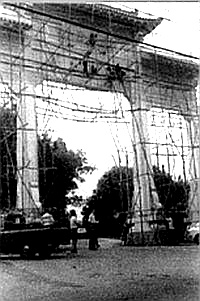
Late 1980: Lee Kuan Yew instructed to remove the characters
"南洋大学" (Nanyang University) from the arch.
(Image source: sginsight website)
(2) In 1963, more than a hundred leaders and cadres of left-wing organisations were arrested in the Operation Cold Store. In fact, that was a massive crackdown on Singapore left-wing forces (mainly trade union leaders and trade unions headed by Lim Chin Siong) by the Singapore ruling clique in collaboration with the British colonial government and the ruling clique from Malaya. The operation was to ensure that the ruling clique headed by Lee Kuan Yew would continue to be in power by way of winning the Singapore General Election in September that year. Obviously Lee wanted those he suspected to be "communists" and dissidents to disappear from the Singapore political arena altogether. For half a century, Lee has been arrogant and complacent about his achieving his ideal.

(3) After the detention of Lim Chin Siong and other left-wing trade union leaders, and the deployment of political repression of left-wing unions, Lee could not wait to revoke Tan Lark Sye's citizenship. By doing so, Lee compelled Tan Lark Sye to quit Nanyang University Executive Committee [so that the government could gain full control of Nanyang University and turn it into a government-run English university], but it was more out of political consideration. This drastic action served as a warning to the other national capitalists. Clearly, it was designed to see that the capitalists would be subservient to the ruling clique, so that the political elites could carry out their big plans for amassing wealth for themselves.

Does the drastic action taken by Lee against the capitalist class as represented by Tan Lark Sye reflect the anti-people and anti-democratic nature of the ruling clique? Has Lee realised his ideal country that matches his concept in the political, economic, linguistic, cultural and other fields? I believe the vast majority of Nanyang University alumni and the Chinese community have already got the answer, and history of the people will give him a fair judgment in due course.

5. The revocation of Tan Lark Sye’s citizenship is an unjust political act, and the Singapore government must reinstate his citizenship for the purpose of doing justice to Tan Lark Sye, his family and the Chinese community!

In conclusion, the revocation of Tan Lark Sye’s citizenship is an unjust political act, and the Singapore government must reinstate his citizenship for the purpose of doing justice to Tan Lark Sye, his family and the Chinese community!

Some members of Nanyang University Alumni have individually published articles calling for reinstating Tan’s citizenship. However, we have yet to come across any one out of the 11 Nanyang University Alumni Associations the world over, that will release an official statement on this issue. Worse still, the bi-annual global reunion functions organised by the Nanyang University Alumni Associations all over the world have yet to make a fair and just appeal for reinstating Tan’s citizenship, even though 13 reunion functions have already been conducted so far. This is highly regrettable.

Since Perak Nanyang University Alumni Association is mobilizing the alumni worldwide to join the memorial gathering for the late Tan Lark Sye in Ipoh on Saturday and Sunday, 7 - 8 September this year, I would request that a resolution “that the revocation of Tan Lark Sye’s citizenship is an unjust political act, and the Singapore government must reinstate Tan’s citizenship” or words to that effect, be adopted at the gathering.

22 September 2013 is the 50th anniversary of the deprivation of Tan Lark Sye’s citizenship. After 50 years, assuming that Lee could heed this appeal for justice, perhaps this will be the best way for the alumni to promote Nantah’s spirit. It is also the best way to commemorate the late Tan and Nanyang University. I will always be with Nanyang University alumni in this endeavour!

(June 2013, Johore Bahru, Malaysia)


Note: The author is also known as Tan Sin or Chen Xin. He is also the present Sahabat Rakyat Working Committee Member.

Thursday, August 1, 2013

现在的人民行动党政府理应 平反陈六使并恢复其公民权

现在的人民行动党政府理应
平反陈六使并恢复其公民权

作者 / 来源:wangruirong (王瑞荣)/ 人民论坛(新加坡)

【注】上述标题是人民之友部落格编者根据原意加以改写的。原标题是《现在的行动党政府有义务和责任就李光耀时代政治迫害陈六使老先生的历史进行平凡并恢复他的公民权!!》

陈六使老先生是东南亚为维护和延续5千年中华文化、为新加坡华文教育和华族文化的生存个人做出巨大牺牲的老一辈华人的典范!
陈六使老先生是领导新加坡华族同胞捍卫新加坡华文、华文教育和华族语言的核心领导者!
陈六使老先生的伟大精神在于他在面对李光耀政权的专横迫害面前不向李光耀拱手妥协!
这是作为新加坡华族的后代、华文教育的后代子孙必须永远铭记在心中的!
任何人今天在谈论维护华文教育、延续华族文化传统的时候,不需要因为李光耀还活着而恐惧颂扬陈六使老先生为新加坡和东南亚华族和华族文化做出不可磨灭的伟大功勋!
任何人在谈论陈六使老先生对南洋大学作出伟大贡献时,不需要因为李光耀还活着而恐惧说出当年李光耀为了个人的政治野心,迫害陈六使老先生的历史真相!
李光耀当年对陈六使老先生的一切指责,包括陈六使老先生为维护华文教育的生存、为维护南洋大学、为保护南洋大学的莘莘学子的安全,个人付出了巨大的牺牲的历史必须获得平反!
这是鉴别谁是真正热爱新加坡的华文教育、挽救日益没落的华族文化的一块试金石!
任何人在推动新加坡的华文教育和华族文化时,大肆颂扬李光耀对新加坡的华族文化和华族优良传统是做的任何‘贡献’,哪怕是‘微不足道’的贡献!这些人不是李光耀圈养的华族败类,就是李光耀消灭华文教育和华族文化的帮凶!他们现在在为即将入殓的李光耀进行涂脂抹粉的目的只有一个:就是要让后人相信,李光耀不是为了个人的政治目的消灭南洋大学、就是要让后人相信,当年李光耀指责陈六使老先生是‘共产党的同情者’、因此,剥夺了陈六使老先生的公民权是正确的!
在李光耀的维权统治时代对新加坡的华文教育和华族文化的摧残和消灭已经是一个不可争辩的历史罪行!
我们不需要李光耀圈养的那些披着所谓‘研究新加坡华文、华文教育发展的历史学者和御用文人’为南洋大学的历史问题进行任何的论证!
我们也不需要李光耀圈养的那些披着所谓‘推动华族文化、弘扬华族传统’的主流媒体的人民行动党党棍、文棍和御用文人拿着李光耀施啥的‘推动华族文化和弘扬华族传统的捐款基金’为李光耀进行歌功颂德!
今天在我们缅怀和纪念陈六使老先生的时刻,我们呼吁全体华族同胞和自己的父辈是华文教育的后代,我们必须要求现有人民行动党政府:立即无条件为陈六使老先生进行历史的平反!——恢复陈六使老先生的公民权!
今天在我们缅怀和纪念陈六使老先生的时刻,我们呼吁全体华族同胞和华文教育的后代,我们必须要求人民行动党政府:正确和实事求是的恢复对陈六使老先生在推动新加坡的华文教育和华族文化所作出的不可磨灭的伟大功勋记载!
今天在我们缅怀和纪念陈六使老先生的时刻,我们呼吁全体华族同胞和华文教育的后代,我们必须要求人民行动党政府:必须对当年关闭南洋大学以及改制新加坡的华校中小学的决定是错误的作出公开道歉!
在李光耀威权统治时期所犯下的华文教育和摧毁华族优良的文化传统给新加坡的华族造成的历史事实已经是不可挽回了!这是李光耀一手造成的!
现在的人民行动党政府与过去这段历史没有直接的关系!但是,作为一个声称要面对现实的人民行动党现有领导完全有义务和责任,就李光耀迫害陈六使老先生的历史问题作出平反!完全有义务和责任恢复陈六使老先生的公民权!

相关链接:
1、正确评价民族教育旗手 陈六使创办南大的功劳
2、800南大校友匯集追思‧陳六使紀念會9月舉行

Saturday, July 27, 2013

正确评价民族教育旗手 陈六使创办南大的功劳

正确评价民族教育旗手
陈六使创办南大的功劳

——写给全球南大校友在怡保举行的”陈六使追思大会”
作者 / 来源:陈成兴(南大校友)/ 南大站

“我想趁着这次霹雳州南洋大学校友会发动全球校友,在今年9月7日(星期六)与8日(星期日),聚集怡保举行“陈六使追思大会”的良好时机,请求这次大会通过“陈六使被褫夺公民权是一桩政治冤案,新加坡政府必须加以平反”或类似内容的提案。今年的9月22日就是陈六使被褫夺公民权的50周年纪念日。50年之后若能让李光耀亲耳听到南大校友发出的这项正义呼声,对广大南大校友来说,无疑是发扬南大精神的最好的表现;这就是对陈六使的最好的纪念,也是对南大的最好的纪念。我愿意与广大的南大校友共勉!”


一、从去年(2012年)新加坡纪念陈六使逝世40周年的言论说起

南洋大学在1953年创办,在1956年开课,而在1980年被新加坡李光耀统治集团关闭迄今已有33年,其倡办人陈六使在1972年逝世迄今已有41年了。过去有过许多南大校友或非校友的学者写了不少关于陈六使和南洋大学的回忆或针对相关议题的评论文章,但这些著作在某些为权贵们所赏识和重用的权威学者看来,都尚未达到学术专著的水平。

李光耀统治集团在1963年新加坡大选结果揭晓的隔天就褫夺了陈六使的公民权,从而迫使陈六使不得不离开南大理事会。从1965年 至1979年南洋大学无论在学制、课程、收生、教学语言等方面逐渐变更,最后成为一所以英语英文为教学语文的大学,在1980年并入新加坡大学,成为新加坡国立大学——1980年也是新加坡终结有百年历史的华教体系(以不超过10所实行新政策的”特选中学”取代)的一年。李光耀统治集团在1982年,又按照他们的新政治需要,把设立在云南园的“南洋大学”改称为“南洋理工学院”,之后又在1991年将它升格为“南洋理工大学”,以体现这所高等学府的性质和地位的变化。李光耀统治集团成功把“南洋理工学院”升格为“南洋理工大学”的同时,还别有用心地肯定“南大精神”,呼吁南大校友协助这所新大学的发展,建议将南大校友名册从新加坡国立大学迁入南洋理工大学,以实现他们所期望“带来新旧南大历史衔接的契机”。李光耀统治集团妄想巧妙改写南洋大学历史的这项计划,终于以失败告终。但李光耀本人对陈六使和南洋大学的话语权的掌控却从来不曾放松。

南洋理工大学中华语言文化中心在2001年就开始了”南洋大学历史研究”,从南大创办人、南大学生会、南大与政府的关系和南大左倾思想4个课题着手展开研究。在2004年主办了“国家疆界与文化图像”国际学术会议,由研究者宣读各自的研究心得。此后在2006年出版了丘淑玲著《理想与现实——南洋大学学生会研究(1956—1964)》,在2007年出版了李元瑾主编《南大图像——历史河流中的省视》的多位学者的论文集之后,在去年(2012年)同时出版了两本重要著作:一本是周兆呈著《语言、政治与国家化——南洋大学与新加坡政府关系(1953—1968)》,另一本是利亮时著《陈六使与南洋大学》。


最后的这本《陈六使与南洋大学》的论著被赏识为“一部开创性的学术作品,并自成一研究体系”。有关当局和权威学者们还特地举办一场名为“纪念陈六使逝世40周年研讨会”实为“又一次清算陈六使和南洋大学”的政治宣传会。如果把上述学者们的著作和言论,跟李光耀在这个研讨会举行之前不到一年时间出版的新书《我一生的挑战——新加坡双语之路》其中第三章“南洋大学兴与败的启示”所揭示的含义和目的,联系起来考察,这些学术著作和相关言论所包含的的政治意义和目的,就隐藏(或者说掩盖)不住了。

二、陈六使不仅是南洋大学倡办人,而且是20世纪50至70年代南洋(主要是新加坡和马来亚半岛)华裔族群争取母语高等教育运动的伟大旗手

陈六使是南洋大学的倡办人,尽管这已是一个不争的历史事实,目前还有别有用心者妄想抹杀这个历史事实。一名南大出身、名闻国际、现居澳洲的历史学家颜清湟却肯定地说,“我们可以对陈六使创办南洋大学的丰功伟绩作一历史的定位:‘没有陈六使,就没有南洋大学。没有南洋大学,就没有超过万名的南大毕业生对新马建国和发展,以及对国际学术界所作出的可观的贡献’。”(见《颜清湟序》,载于利亮时著《陈六使与南洋大学》一书,页XV)

我个人认为,只是尊崇陈六使为南洋大学倡办人,是不足够的;陈六使不仅是南洋大学倡办人,而且是20世纪50至70年代南洋(主要是新加坡和马来亚半岛)华裔族群争取母语高等教育运动的伟大旗手。我提出这个见解的主要论据是:

•(1)没有陈六使,就没有南洋大学,也就没有后来在马来亚半岛由华人社会建立起来的继承南洋大学的民族教育精神的新纪元学院和南方学院(前者正在等待升格为大学,后者已在今年(2013年)升格为大学)——新马分家之前,南洋大学原是马来亚、沙巴和砂劳越华文教育体系中的高等学府;

•(2)新纪元学院与南方(学院)大学如今可以说是马来亚半岛华人社会反对单元教育、反对民族同化而建立起来的高等教育学府,换句话说,也就是马来亚半岛民办的从小学、中学到高等院校的完整的民族(母语)教育体系的重要组成部分;

•(3)陈六使创办南洋大学及其坚定不移的信念与奋斗到底的精神,就是为后来的新纪元和南方学院的设立,树立了一个华裔族群在本身的所在国争取母语教育生存发展权利的光辉典范。从新加坡和马来亚半岛的华文教育的发展史来看,陈六使就是20世纪50至70年代南洋(主要是新加坡和马来亚半岛)华裔族群争取母语高等教育运动的伟大旗手,跟在马来亚半岛反对“华文中学改制”与“争取接受母语教育的权利”的华教运动的最杰出领袖林连玉,可以互相媲美。他们两人同样是上个世纪新马华教运动的伟大旗手,不同点在于:林连玉是一介布衣,陈六使是千万富翁。

三、陈六使不仅是“谨慎的资本家”,而且是敢于向当时的殖民政府与宗主国,争取被压迫民族的政治、经济与语言文化权利的民族资产阶级代表人物

根据南大校友陈炎成所写的《陈六使生平大事表》记载,陈六使在1897年诞生于中国福建省同安县集美乡(今属厦门市)的一个以务农捕鱼为生的贫寒家庭,是陈嘉庚的同乡。他在20岁时(即1916年)离乡背井,来到新加坡谋生,先到陈嘉庚在马来亚的树胶园工作,为陈嘉庚所赏识而后调他到办公室,协助经营树胶贸易。1923年陈氏兄弟合资成立“联和树胶公司”开始创业。两年后又成立“”益和树胶公司“大展鸿图。终于在10年内,名列新马10 大胶商之榜。陈六使自1937年起即担任新加坡树胶公会主席,又任胶较工会主席,成为新马树胶业团体领袖。1950年,陈六使当选为新加坡中华总商会会长,也当选为新加坡福建会馆主席(此后他连任至1972年逝世为止)。1950年代陈六使的树胶公司因南北韩战争爆发导致胶价大涨而财源广进,因此1950年代是陈六使企业的高峰期,除树胶之外,陈氏兄弟也投资银行业、报业和保险业。陈六使曾担任华侨银行董事主席、香港集友银行董事主席、南洋商报董事主席。他和兄长文确先后担任过亚洲保险有限公司和亚洲人寿保险有限公司董事主席(以上所述,见于王如明主编《南洋大学倡办人陈六使先生百年诞》一书,八方文化企业公司1997年出版,页143—174)。

英国殖民部当时对陈六使做了这样的评价:陈六使是一位谨慎的资本家,他对商业的兴趣甚于政治。但是,这位白手起家、能够经营树胶国际贸易的成功企业家,在《陈六使与南洋大学》专书作者的眼里和笔下,只是一名不值得推崇或敬仰的“学历不高,对兴办大学毫无经验的千万富翁“。作者似乎要让人相信:”由于办学经验不足,陈六使忽略很多相关细节,例如以”有限公司“名义来注册,造成政府无法承认南大学位“;”由于缺乏全盘计划和周详考虑,当南大学位需要得到政府承认时,这些问题就一一被两份报告书所揭露“(见该书第七章结论篇,页202、207)。已有多名学者和南大校友先后在《新加坡文献馆》南大史实栏,贴文驳斥该书作者颠倒是非的胡说。

我个人认为,陈六使不仅是“谨慎的资本家”,而且是敢于向当时的英殖民政府与宗主国,争取被压迫民族的政治、经济与语言文化权利的民族资产阶级代表人物。我提出这个见解的主要论据是:

•(1)陈六使从本身的奋斗过程和华族同胞的遭遇,认识到殖民地人民必须拥有参政权,才能改变本身的处境和前途,。他大力主张华人必须争取公民权和参政权。1951年2月,陈六使担任新加坡中华总商会会长时,代表华人向英政府提呈要求放宽公民权的备忘录,要求让非英籍华人取得公民权。1952年2月再呈备忘录继续争取。1953年英殖民政府颁布《林德宪制委员会报告书》,陈六使便领导中华总商会,发动拥有投票资格的20万选民积极参与选举活动,行使自己的神圣权利。陈六使领导中华总商会,结合广大群众的力量,终于迫使新加坡议会在1957年7月通过公民权法案,为当时居住在新加坡满8年的22万民众争取到应有的公民权。根据《李光耀回忆录》中的“李光耀纪事年表”记载:从1950年至1959年,李光耀由英国返回新加坡执业当律师,并担任几间工会的法律顾问;人民行动党在1954年11月才正式成立,李光耀当选党秘书长才立足于政治舞台;

•(2)战后初期,英国在新马设立军政府管治,树胶成为统制物资,由英国垄断买卖,树胶商必须以低价卖给英国伦敦收购组织。胶商无法展开树胶自由贸易,陈六使因此一再呼吁解除统制,终于迫使英国殖民政府在1947年元旦宣布取消这项统制。树胶价格因恢复自由买卖而逐渐上升。1950年6月25日南北韩战争爆发,美国和中国随即参战,至1953年7月27日结束。树胶是重要战略物资,欧美国家和前苏联集团争相采购囤积,其价格因而节节上升,使到胶商获利丰厚。此后整个50年代,陈六使的“益和”及李光前的“南益”被誉为“南洋树胶两大巨头”。为了争取他们所代表的民族资产阶级以及殖民地广大人民的利益,陈六使和李光前力图反抗甚至打破新马树胶行业遭遇到的控制和垄断,力争把树胶的国际贸易中心,从消费国的伦敦和纽约转移到生产国的马来亚和出口地的新加坡。这都是陈六使和李光前作为民族资本家对马来亚和新加坡的经济发展所作出的巨大努力和不朽贡献;

•(3)1954年新加坡立法议会里规定只许使用英语英文。中华总商会通过其议会代表陈振传,在立法议会提出废除语言限制议案。1951年1月,陈六使领导中华总商会,发动所有社团和民众,展开10余万人签名运动,要求将华语及其他民族语言列为议会语言。1955年8月15日,英国殖民部大臣林诺鲍从伦敦来到新加坡,中华总商会和属下商团组成1,600人的请愿团,在加冷机场手持标语横幅向他请愿。林诺鲍告诉代表团:本地政府有权力解决这个问题。1954年2月9日立法议会通过,采用英、华、巫、印四种语言为议院通用的语言。陈六使领导中华总商会争取华语及其他民族语言列为议会语言,是非常执着的,即使他已从会长职位退了下来,还是中华总商会争取议会使用多种语言运动的非常重要的推手。陈六使向英殖民政府争取立法议会使用多种语言的主张和行动,跟他此后在南大办学问题上,坚持民间参与主办、保留华语教学媒介、反对政府掌控主宰、反对变为英文大学的主张和行动,是相一致的。

四、陈六使只是一个敢于依法争取民主权利的民族资本家,却被李光耀视为”支持共产分子的华族沙文主义百万富翁”、套上“被共产党利用来进行反国家活动”的罪名而褫夺其公民权——这是李光耀蓄谋已久、矛头指向民族资产阶级的一项政治镇压行动

李光耀统治集团在1963年新加坡大选结果揭晓的隔天(即9月22日)就褫夺了陈六使的公民权。政府宣布褫夺其公民权的理由是:“陈六使曾经积极和南洋大学的反国家共产党活动队伍合作,这群人以前是共产党控制的新加坡华文中学学生联合会的鼓动者。陈六使曾经公开地与大事叫嚣地干预这次选举,签署这些共产党以社阵候选人身份起草的声明,抨击政府。”李光耀当年褫夺陈六使公民权的专横行动,50年来没有任何保皇派学者可以说明它的正当性。《陈六使与南洋大学》专书作者利亮时,也只是在他的结论篇中这么说,“从笔者目前所能掌握的资料看来,陈六使并没有和共产党有密切的关系。陈六使在早期殖民政府的眼中,只是一位对商业的兴趣甚于政治的资本家。在陈六使公民权被褫夺的一年后,由马来西亚内政部长发表的《南洋大学内之共产主义运动》报告书也没有点名陈六使是共产党同路人。”(见该书,页209)

我个人认为,该书作者利亮时所提出的“由于他(陈六使)挽救华文教育心切,希望通过自己和南大生的力量,扭转整个政治局面,以挽救南大甚至整个华文教育,因而兵行险着。惟结果是人民行动党成功蝉联执政,而他就为自己的冒险举动付出了代价,即个人公民权被褫夺和离开南大领导层”的评论,是作者有意取悦当权者而发表的不具丝毫学术价值的肤浅说辞。

李光耀在1999年出版的《回忆录(1923—1965》中有这样的表白:“1963年的选举对共产分子来说是个分水岭。选举过后不久,两名背叛人民行动党的议员,在以社阵候选人的身份当选后,突然转入地下失去踪影。他们是陈新嵘和黄信芳。前者是我过去的政务次长,后者干过颠覆建国队的勾当。他们一定以为社阵竞选一失败,他们就会被逮捕。然而我们的目标却暂时对准其他人。我们决定对一批知名人士采取行动,以期收惩一儆百之效。这批人曾替共产党人出面做事,他们以为凭着自身的财富和他们在说华语或方言社群中的地位,就可以免受惩罚。在我们的名单里,陈六使名列榜首。他是新加坡中华总商会的名誉会长,也是南洋大学的创办人。我心里早就盘算着,一旦政府具备政治实力,将会找他算账。如今我们有了政治实力,就不能容忍他在报上继续大谈共产主义路线,并利用自己在商界的地位作挡箭牌。”(见该书,页568)

李光耀的这段表白和相关的历史事实印证了以下主要三点:

•(1)1959年人民行动党在新加坡人民反殖运动的推动下上台执政,李光耀掌握自治政府总理大权之后,很快就走上反人民、反民主的道路,导致以林清祥为首的工运领袖决定与李光耀划清界线,在1961年退党,另组新加坡社会主义阵线(简称社阵)。到1962年,新加坡以工人阶级为主导的有组织力量有了空前的发展。因此,以林清祥为首的工运领袖成了李光耀的“眼中钉“,社阵成了人民行动党接管英殖民政府逐步移交政权的“竞争者”。

1980年末:李光耀下令拆卸南大牌坊字样
(此图来源:新加坡文献馆)
•(2)1963年的“冷藏行动”(即“二•二事件”)逮捕了百多名左派组织的领袖和干部,其实就是李光耀统治集团为了保证赢得当年9月新加坡大选继续掌握政权,与英国殖民政府和马来亚统治集团联合采取,对新加坡左派组织力量(主要是以林清祥为首的工运领袖和工会组织)采取的大规模镇压行动。李光耀的目的显然是想让他心目中的“共产党人”和异议份子,从此完全消失于新加坡的政治舞台。李光耀也因实现他的这个理想而洋洋得意,不可一世,迄今已有半个世纪。

•(3)李光耀完成了对林清祥等众多左派工运领袖的逮捕监禁以及部署了对左派工会组织的镇压步骤之后,在赢得1963年9月大选继续掌握政权的第二天,便迫不及待地宣布褫夺陈六使的公民权。李光耀的这项行动,除了迫使陈六使退出南大理事会,让政府方便全面控制南大,从而更迅速地把南大变质为一所官办英文大学的直接目的之外,更为重要的政治意义还在于:把矛头指向民族资产阶级,首先褫夺陈六使的公民权,不过是李光耀“惩一儆百”的一项标志性行动罢了。李光耀显然是旨在威慑新加坡资本家必须乖乖听话,以便统治精英可以大展鸿图。李光耀在赢得大选取得政权的第二天,就对付像陈六使这样的资产阶级代表人物是否足以说明他所掌控的政权的反人民、反民主的本质与特性?李光耀是否实现了符合他的政治、经济、语言、文化等方面的理念的理想国家?绝大部分南大校友和广大的华族群众都心里有数,人民的历史一定会给予公正的评价。

五、陈六使被褫夺公民权是一桩政治冤案,新加坡政府必须加以平反,还陈六使、他的家人和华人社会以公道与正义!

总而言之,陈六使被褫夺公民权,显然就是一桩政治冤案,新加坡政府必须设法加以平反,还陈六使、他的家人和华人社会以公道与正义!

过去,有过一些校友曾发表陈六使被褫夺公民权必须获得平反的个人感受的文章,但是全球有11个南大校友会组织,却未见其中1个曾发表陈六使被褫夺公民权是必须平反的冤案的正式文告。更甚的是,全球南大校友会每两年轮值在一些国家或地区举行的联欢大集会,至今已有13次(届)了,却没有一次(届)表达过陈六使被褫夺公民权冤案必须平反的正义呼声。我个人认为,这是一件非常令人遗憾的事。

因此,我想趁着这次霹雳州南洋大学校友会发动全球校友,在今年9月7日(星期六)与8日(星期日),聚集怡保举行“陈六使追思大会”的良好时机,请求这次大会通过“陈六使被褫夺公民权是一桩政治冤案,新加坡政府必须加以平反”或类似内容的提案。今年的9月22日,就是陈六使被褫夺公民权的50周年纪念日。50年之后若能让李光耀亲耳听到南大校友发出的这项正义呼声,对广大南大校友来说,无疑是发扬南大精神的最好的表现;这就是对陈六使的最好的纪念,也是对南大的最好的纪念。我愿意与广大的南大校友共勉!


(2013年6月杪完稿于马来西亚,柔佛新山)


注:本文作者目前也是人民之友工委会工委。

Saturday, July 13, 2013

谈关中汇报(7月26日更新图片)

谈关中汇报

作者 / 来源:释空理 /《当今大马中文版》2013年7月10日刊登
(7月26日更新图片)

关中的课题,虽在报章上都不断的有发表各自支持与反对的原因,但我想还是不足以让“模糊者详,不信者服,已信者强”的地步。但经过两方的公开汇报后,相信与会者会更详细的了解事情的来龙去脉与争论点所在,以及“独中”几十年来所面对的逼迫、挤压等问题,然后从中得到更完整的看法与正确的决定。

对于我个人来说,确实是经过这两场的汇报后,才比较全面的了解此事,在《关中家长的疑虑》一文中所提出的一些问题也因此得到一些解答。然,这两场汇报中也给我带来了一些感想与看法。在听了关中的汇报后,会使人感觉到错怪了关中,尤其是面对老师们的热心与用心,以及办学理念。但了解了另一边的实情之后,又会让人同情关中的梦想,责怪董总的“无情”与“忍心”。虽然这冷酷的决定是基于董总面对着残酷的教育法令,不得已而采取的措施,但对于关中的同情,还是会不时的冒出来。

主要争论点在于批文中第八项的“灰色”地带。对于华教抱有热诚的老师来说,那是一个难得的“生机”,是一扇华教重生的“妙门”。即便它不是独中,借着这一扇门来发挥华文教育,它依然可以让学生们享有并完成独中教育以及统考,这是多么美好的事。然而,对于经历了数十年风雨的老斗士们,看到的是“危机”,而不是生机。因为在门的后面,是一个布置得非常华丽、舒适的陷阱,掉进去、死了,也还不知道为何而死的陷阱。那对于华教虎视眈眈的单位,可是一个变法成功的大好“良机”,等待着无知的华教拥护者踩上这一地雷,从此完成了他们终结华教的任务。

若有生意人在内,那可能变成“商机”,一道名利双收的大门。在这教学环境里,当然不会直接的带来利益,但因学校而带动的屋业与商业发展,真的会是财源滚滚的大门。至于被送进去的学生来说,可能因转校问题而变成“任人鱼肉”,或被搬来搬去的可怜“小鸡”。对热心于华教又模糊的家长来说,那可能是孩子前途无亮的“飞机”-- 被放了。

在这充满“玄机”的灰色地带,任你有百变的本事,只要一个不小心,就随时会落入魔掌,没得翻身。在这种情况之下,董总可以不持谨慎的态度而细细的、深入的,放大的、长远的,多方面的去了解关中对华教发展的影响吗?因此,持有“保守”态度来看待关中一事,应该会是更为理想的做法。在感性上,虽希望那是一扇重生门,希望关中能等同于独中。但理性上却阻止了我的感情用事,不得不认清“关中”并非“独中”的事实,拒绝投给关中同情的一票。

公有公理,婆有婆理,各有立场,各执己见,相持不下,难到就如一般所说,事情是没有决对的错与对,只在于你从那一个角度去看问题吧了?这是时下流行的一种“可怕”观点。如果这一观点能够成立,请问公理还在吗?就如朱玉叶的奸杀案。你我是否能够接受这一种可怕的审判与公理?因此,关中一案,如批文没改,双赢的局面是不可能出现的铁定事实。这并不关系到董总认同双轨制或接受关中参于统考的问题,而是国家立案的事实,所以才绝无妥协的办法。如面对关中时还是一厢情愿的幻想它为独中,并决意要报读,那就只能祝福他们了。

回头看看两场汇报主办单位的表现,发现到关中的汇报表现比较和缓,虽然私底下遇上一位不礼貌的老师,而董总的立场与表现则强硬得多。但在论理的解说上,董总比较全面、有力得多,而关中的说法有的不免牵强了些。心想,若这两者的优缺点能够互补,将会是个完好的汇报会。除此,董总汇报的与会者也有人反应说,独中支持者对于陈老先生的情绪反应过火了些。毕竟一位异议者能受邀而前来面对那么多的反对者,是需要勇气的,更何况他还是为着办华教而努力的老前辈。虽然双方存有非常相左的意见,我想独中支持者还是有必要给他基本的尊重,加上主办单位的招待,让他安心的听完汇报。谁晓得,他可能因为这一汇报而“茅塞顿开”,化干戈为玉帛,以后大家同走在一条路上。虽然,这是个人的一厢情愿,但尝 试从另一个角度看这件事,应该无伤大雅。最后,大家别忘了事关紧要的教育大“揽”图之约。

Pengumuman / 启事 / Notification

Pertukaran alamat blog dan e-mel

Selamat sejahtera, Sahabat Rakyat Working Committee akan menggunakan alamat e-mail dan alamat laman web (Blog) yang baru seperti berikut bermula 1 Januari 2014:

Emel: sahabatrakyat.my@gmail.com
Blog: http://sahabatrakyatmy.blogspot.com

Sekian, terima kasih dan Selamat Tahun Baru!

*********************************************

更换部落格网址与电邮地址

本工委会由2014年1月1日起,开始全面使用以下新电邮地址及部落格:

电邮地址:
sahabatrakyat.my@gmail.com
部落格:http://sahabatrakyatmy.blogspot.com

谢谢关注。祝大家新年进步!

*********************************************

Change of blog and email addresses

Please be informed that Sahabat Rakyat Working Committee will be using the new email and blog addresses below commencing 1 Jan 2014:

Email:
sahabatrakyat.my@gmail.com
Blog: http://sahabatrakyatmy.blogspot.com

Wishing you a progressive new year!

通告

    欢迎热心人士下载印发、
资助印制大选告人民书
把国阵抛弃到历史的垃圾堆中去!

作为活跃于柔佛州的为民主人权和民族尊严而奋斗的两个组织——柔佛州人民之友工委会与柔州兴权会(HINDRAF JOHORE)针对第13届大选,在去年底联合发表了一篇主题为“打破巫统霸权,建立民主联合阵线;团结全州人民,实现三大迫切诉求”的《告柔佛州人民书》;我们毫不犹疑,也毫不含糊主张“把国阵抛弃到历史的垃圾堆中去”。

我们在去年底的几个大规模群众集会期间,将《告柔佛州人民书》的四种语文(巫、华、印、英)传单派发给群众。我们也想要到各地去分发这份传单又力所不逮,特在此提供四种语文的PDF版本,以便各方热心人士下载、印制成传单,分发给需要阅读它而又不懂上网的亲戚朋友和各界人士,帮助我们把传单传得更广。
……

点击此处以阅读全文


Malaysia Time (GMT+8)